


Solution for landfill engineering
Safe waste management requires compliance with local landfill regulations. The MTTVS geosynthetic material system meets the requirements of countries around the world and is of the highest quality. MTTVS geosynthetic materials are widely used for the recycling and redevelopment of contaminated sites, as well as for sealing, middle and bottom sealing, to protect the environment from pollution, pollution, and degradation. Their functional scope ranges from protection, filtration, separation, and drainage to reinforcement; They can resist corrosiveness, flammability, and toxic substances.
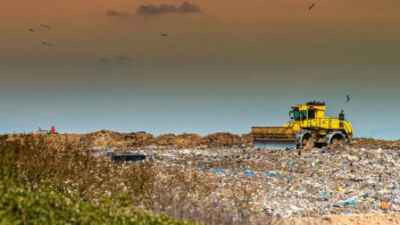
Landfill regulations

Reclamation and Reconstruction of Polluted Sites

Landfill closure function

Landfill Cover Barrier

Intermediate system

Bottom lining of landfill site
1. Landfill regulations
Regulatory agencies around the world have long accepted geosynthetics as alternative design solutions or directly required the use of geosynthetics in certain applications. Due to the requirement to use geosynthetics in urban solid waste containment and closure systems, the waste management department benefits more than any other department. Several countries such as Europe, Germany, and the United States have provided exemplary cases of incorporating geosynthetics into environmental regulations to prevent or reduce the negative effects of landfill on surface water, groundwater, soil, air, or human health as much as possible. This is achieved by introducing strict technical requirements.
2. Reclamation and Reconstruction of Polluted Sites
Safe and permanent closure of contaminated areas
Previously, landfills and contaminated sites were often covered and repaired. These engineering works may also include beneficial reuse of the site. The on-site pollutants and uneven settlement of the ground above these previously abandoned units pose many geotechnical challenges. Therefore, sealing measures are usually selected based on their ability to isolate and contain pollutants. The closure measures can also be evaluated based on their ability to increase the carrying capacity of the site to achieve safer reuse.
The sealing system for previously discarded batteries and contaminated sites must have the highest quality. This is especially true when planning for land reuse (such as amusement parks, public gardens, sports fields). If the goal is more commercial reuse, such as parking lots, or transportation routes that will pass through any part of the land, higher load capacity is required.
Usually, it is necessary to rebuild steep slopes to save space or operate normally in reuse designs. Geosynthetic material capping systems can effectively utilize local soil. When external soil sources are needed and a large amount of land may need to be renovated, whether from the perspective of material procurement or from the perspective of greatly reducing construction time, the ability to use local soil can save a lot of money during the construction process. Expensive purification measures can be avoided. Reducing or eliminating the heavy transportation of external materials can not only save costs, but also reduce the carbon footprint of the project.
Geomembranes and geosynthetic clay liners safely and permanently encapsulate contaminated areas, reducing or eliminating pollutant emissions. These geosynthetic barriers serve as coils and can be efficiently installed. Their various products are supported by high-quality raw materials, enabling them to address specific site challenges such as the erosion of pollutants to be contained, site topography, precipitation changes, and so on. Moreover, compared to traditional sealing solutions such as compacted clay and other on-site improvement measures, geosynthetic material systems are significantly thinner, but provide equal or higher safety. This advantage can save on capping costs and enable the site to maximize its storage capacity before shutting down.
These sites are also reinforced with geogrids to ensure traffic or construction on soft soil, or to stabilize areas to prevent collapse. Non woven geotextiles, including those embedded in geogrids, can also be used to provide soil separation and stability. In order to achieve better ecological, economic, and performance related GCL encapsulation for contaminated sites, GCL with impermeable polyethylene coating can be used. Due to the installation of two barrier systems in one step, it helps to make GCL installation more effective, secure, and durable. GCL improves overall performance and reduces the risk of a single lining system.
3. Landfill closure function
Geosynthetic material system ensures long-term drainage function Typically, all major landfill types (I, II, and III) require drainage layers. This layer directly discharges precipitation to avoid the formation of water heads on the capping system. The drainage layer must be permanently protected from blockage by soil particles in the covering layer. A drainage geotextile composite material with a three-dimensional matrix and a filter geotextile covering layer can control leakage and is appropriately designed to meet the design requirements of landfill covers.
This type of geosynthetic drainage system is fully protected from the risk of damage caused by the installation of covering soil. This enables the geosynthetic material system to ensure the required long-term drainage function.
When installing a mineral drainage layer on a geosynthetic seal, needle punched nonwoven geotextile can replace the necessary sand protection layer on top of the geotextile membrane. In these cases, it should also be evaluated whether filtering/separating geotextiles is the best solution between the drainage layer and the covering soil.
In landfill closure projects, utilizing steep slopes to minimize soil disturbance footprints on the site has become increasingly important. However, the multi-layer nature of the sealing system complicates this space saving goal. It presents special challenges to interlayer shear strength. Here, textured geomembranes provide enhanced friction characteristics to ensure slope stability. In addition, geogrids can be used to achieve cost-effective and safe steep slope engineering.
Protection, filtration, separation, drainage, reinforcement
A three-dimensional composite drainage network is a composite material with a polymer drainage core and at least one outer layer of non-woven geotextile, which can provide filtering function. Geotextiles can prevent soil particles from damaging the pressure and flow of drainage fluids. Installed on the top of the geomembrane, the geotextile side of the composite material can simultaneously serve as a protective layer.
MTTVS geotextile needle punched non-woven geotextile can be used as a protective/buffering or separation geotextile in landfill sealing systems. In many countries, the minimum requirement for the mass per unit area of protective geotextile is 800 grams per square meter. The non-woven fabric used for separation and filtration must be 300g/m ². Geogrids can minimize or eliminate settlement and redistribute loads to the greatest extent possible. They can also build steeper embankments. Meet the reinforcement application of landfill projects.
4. Landfill Cover Barrier
After closure, the landfill must be covered.
The specific requirements for permanent sealing systems for Class I (inert waste), Class II (urban solid, harmless waste), and Class III (hazardous waste) landfill sites are usually outlined in national regulations.
High safety requirements have been placed on all components of the sealing system. Each geosynthetic material should usually obtain approval from federal authorities or national agencies. Part of the approval process should show in the test data that the sealing system components can provide a service life of at least 100 years.
In addition, there has been a significant increase in interest in the potential reconstruction of former landfills, making closure control even more important. The geosynthetic sealing system provides a safe, cost-effective, and environmentally friendly solution for repeatable high-quality sealing.
The surface sealing of Class I landfill sites usually only requires a single geosynthetic component, such as a geomembrane or geosynthetic clay liner. This emphasizes the performance quality and trust of these materials.
According to some national and international landfill regulations, such as the European Landfill Directive, Class II designs must have two sealing components. These elements must be checked against each other, therefore they must have different components. The combination of geosynthetic clay liner (GCL) and geomembrane is a safe, qualified, mature, and recognized successful long-term design method.
Landfill Closure Solution
MTTVS HDPE geomembrane has been used as the only sealing element in a Class 1 landfill (inert waste). In Class II (urban solid waste; non hazardous waste) and Class III landfill sites (hazardous waste), geomembranes are used in combination with mineral/clay layers (such as compacted clay liners). This type of geomembrane meets the strict chemical and physical requirements required for safe and long-life designed landfill sites. For slopes up to about 1:9 or uniform structures, use a smooth surface geotextile, and for steeper slopes, use a textured geotextile. This solution provides a strong barrier to prevent rainwater infiltration and methane migration.
MTTVS ® Geosynthetic clay liner (GCL) is a composite material made of two layers of geotextile, which is wrapped with a core of high expansion powdered sodium bentonite. These three layers are densely and thoroughly needle punched together, and the fibers are anchored ("heat locked") in the bottom geotextile. During the manufacturing process, the geotextile is needle punched and a proprietary heat locking process is used to firmly bond the geotextile fibers onto the entire surface of the material. This can prevent bentonite erosion and improve the durability of the material. MTTVS ® GCL replaces thicker and more complex traditional mineral seals. The geosynthetic material method provides a barrier that is more resistant to drying and self sealing to prevent installation damage.
5.Intermediate system
The intermediate seal separates adjacent landfills
If the new storage unit is raised or extended horizontally, an intermediate seal is required. When adjacent landfills do not have sufficient sealing to serve as a foundation or appropriate filling material due to different classifications of landfills between adjacent units, they can be used. Therefore, the intermediate seal can be used as the upper or sealing layer of one battery, while also serving as the bottom seal of the next battery.
Most landfill regulations do not explicitly describe intermediate seals, so licensing agencies typically require typical bottom lining requirements. From a historical perspective, the zoning decision for urban solid waste landfills has been issued, where the intermediate seal should be constructed using the most advanced barrier currently available, such as using approved geosynthetic clay liner (GCL) instead of traditional mineral seal and approved geomembrane.
The advantages of this method are obvious: geosynthetic barrier systems are easier to install than traditional mineral seals (such as traditional compacted clay or large-scale ground improvement methods) and occupy less landfill space. In addition, the flexibility of geosynthetic barriers enables them to adapt to specific site conditions and greater settlement strain tolerance. Geosynthetic materials save a lot of time and money here, reduce the demand for soil and aggregate harvesting and interference, and greatly reduce the transportation cost of on-site materials (because the truck loading required for geosynthetic materials is much less than that of aggregates). In addition, the geosynthetic material layer has become thinner, opening up revenue generating airspace for landfills.
If the old abandoned unit cannot provide sufficient stability to support the construction of the new unit, geogrid reinforcement may be required. This method can also create more efficient and space saving designs.
6.Bottom lining of landfill site
Geosynthetic materials meet the strict control parameters of landfill liner regulations.
Geosynthetic materials meet the requirements for waterproofing and drainage systems in waste storage facilities.
The foundation lining system of landfill sites can permanently protect soil and groundwater from the impact of pollutants in waste. The requirements for lining systems are usually specified in national regulations, and geosynthetics have become a common component of these systems. Geosynthetic materials meet the strict control parameters of landfill liner regulations.
Geosynthetic materials provide efficient, significant, and long-lasting barriers for long-term environmental protection. But achieving this effect requires the correct design, standardization, and installation of geosynthetic material systems. Removing waste to repair or remedy poorly designed or executed barrier systems is technically difficult and expensive. The geosynthetic materials used in the base lining system must be made of high-quality raw materials. Geosynthetic materials must have high resistance to chemical and biological attacks. For slopes, polymer barriers must have friction characteristics suitable for geosynthetics geosynthetics and geosynthetics soil. Understanding how to correctly evaluate and select these materials will prevent unacceptable creep or tensile stress in the system.