


Geosynthetics(geomembrane geotextile GCL geogrid) in mining work
Geosynthetics in mining work
As the scale of mining companies gradually expands, the daily mining rate, the scale of single-site operations, and the costs associated with mining increase year by year. Advances in extraction technology have improved the recovery rate of ore bodies. Extensive engineering is required to make the mine perfectly cost-effective and environmentally friendly. Geosynthetics are one way mining companies are achieving their goals.

Geosynthetic solutions for various projects in the mining industry
1.Heap leaching
Heap leaching has become a huge driver of growth in the global mining industry. More than 35% of every copper and gold supply sold today is produced by heap leaching. Now brass, ore copper, nickel laterite, uranium, and even rare earths are produced by heap leaching.
The premise of heap leaching is the sealing support of the geosynthetics. Geomembranes and Geosynthetic Clay Liners (GCL) are used in system solutions as heap leach pad liners, enrichment solution trench liners, process pits, on-site water storage, "raincoats" over ore heaps to drain rainwater (rather than dilution leaching reactor solutions) and on-site wastewater management.
Heap leaching projects are one of the largest users of geomembranes, consuming an estimated 40% of all geomembranes produced, and this figure continues to increase. High-density polyethylene (HDPE) geomembranes offer excellent chemical resistance, stress crack resistance, and UV resistance. They are durable and chemically compatible to withstand aggressive mining heap leaching solutions in stacks and solution tanks. The available textures can enhance the friction properties required for slope stability of the lining system. Geomembranes are a cost-effective solution for on-site water management and treatment fluid containment.
Geomembranes are not everything a mining site needs. Nonwoven geotextiles provide long-term, strong protection and friction stability for geomembranes in difficult terrain and high mine pile scenarios. In addition, if used in mining operations, a composite lining solution (Geomembrane with Geosynthetic Clay Liner, GCL) can provide reliable, efficient, long-term lining performance for improved heap leaching economics and environmental performance.
The "raincoat" lining prevents rainwater from entering the ore pile, so the pregnancy fluid is not diluted. This method is more efficient. In addition, geosynthetic lining systems can protect water resources on site. Conserving water in remote mining can reduce expenses, where the cost of water has increased by 300% over the past eight years.
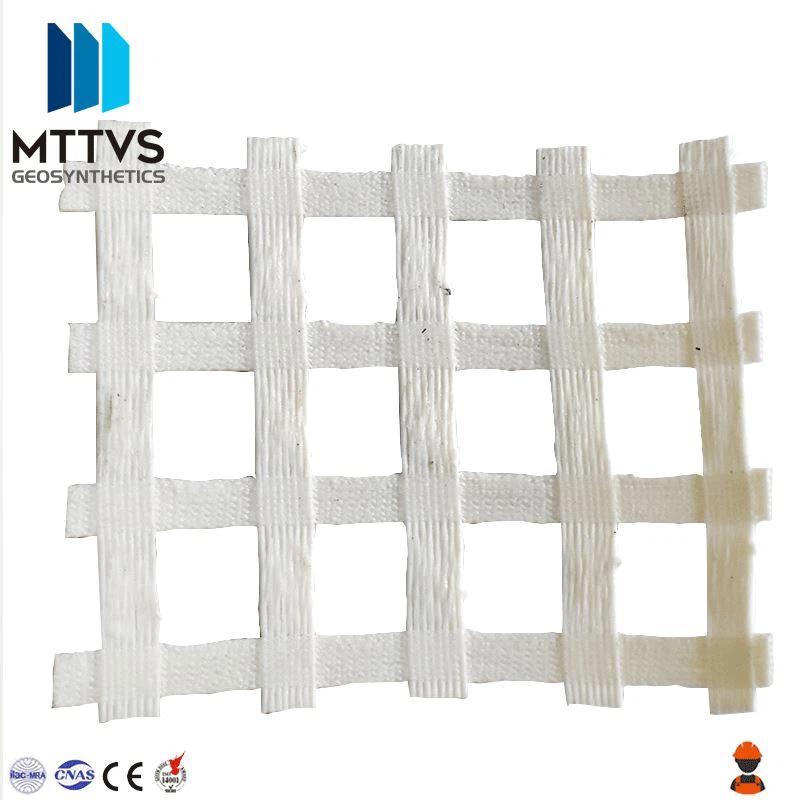
In remote mines, it is crucial to ensure smooth roads. Geogrid reinforcement stabilizes berms, embankments, crusher walls and other soil structures. Guarantee the road load of 100 tons for many years. Without costly road failures, a mine could lose millions of dollars a day if the road fails.
Geotextiles provide separation of particle layers, filtration stability in geotextiles, and protection from other geosynthetics. Combined, these materials can improve recovery of valuable materials, sequester contaminated waste, keep sites open, and make closures a more efficient and less expensive endeavor.
2.Tailings Management
When valuable deposits of ore are mined, the remaining ore is waste. Typically, it makes up a large percentage of the ore processed by mines. Tailings can be contaminated by the extraction process or contain components that are harmful to the environment, so they must be isolated to prevent long-term damage to the environment.
Design engineers working in mines must allocate a large amount of space to properly control tailings. All or most of this area must be sealed with a water-impermeable geosynthetic material (e.g. geomembrane) or composite lining system (e.g. geomembrane/geosynthetic clay liner). These sealing systems protect the bottom and walls of the cistern. Typically, the surface of the tailings will be covered by a geosynthetic system after the battery or mine has been shut down.
As the mine has grown in size, the engineering required to properly control the tailings volume has intensified. This expansion of containment typically requires not only lining systems, but also reinforcement and sealing systems for berms around the tailings pond. Weaker pure earth berms are at risk of saturation, erosion and failure. In addition, the increased depth of tailings storage ponds requires stronger containment engineering designs. The geosynthetics used must be durable and proven long-term in harsh environments. For example, tailings ponds may be more than 50 m deep. In these cases, the contaminated, often muddy, waste is too deep to be dangerous for lining and reinforcement systems to monitor. The environmental safety of the site depends on these environmentally friendly systems, and the chosen geosynthetics must be trustworthy.
Here, geosynthetic solutions include HDPE geomembranes, GCL, geomembrane-GCL composite systems, nonwoven geotextiles and geogrid reinforcement.
3.Evaporation pond
Evaporation is used in various mining operations to separate valuable materials from water or brine. For example, various salts can be extracted by evaporation. The lithium-rich brine can be concentrated by evaporation. Harvested from solar pools, these materials can be refined into items used in various industries, agriculture, food, and more.
Evaporation behavior in engineered ponds may also be an effective solution for sites with the goal of remediating or sequestering contaminants, especially if the sediment is contaminated.
Evaporation processes generally require considerable scale to be more efficient and economical.
Geosynthetic lining solutions are used to prevent the loss of valuable materials in seepage. They also provide strong environmental protection. Materials mined by evaporation are potentially aggressive and require environmental protection, especially the concentrated materials produced by the evaporation process.
In many cases, the pregnant solution is pumped into engineered ponds for multiple cycles until the pond is filled with a harvest large enough to economically justify its collection. The system may be exposed to the material of interest and harsh environmental conditions for an extended period of time (eg, years). Therefore, long-term performance and durability are critical for evaporation pond lining systems.
Geosynthetic solutions in evaporation ponds typically include HDPE geomembranes and geosynthetic clay liners.
4.Mine Closures
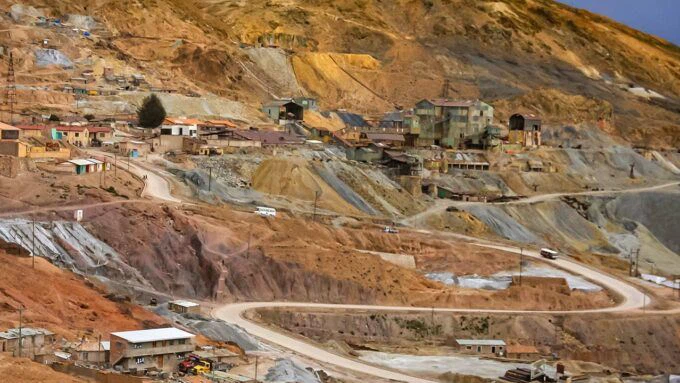
Mine closure is a state that every mine will have. Mine may close in a few months or reopen in a few years at the same location. The use of hazardous chemicals in mining activities has caused severe soil disturbance, and when operations ceased, it became an environmental threat and responsible mine closure was necessary. One of the most effective long-term ways to improve site safety is to install geosynthetic capping systems to isolate mining areas.
Geomembranes, geosynthetic clay liners, geotextiles and geocomposite drainage materials are used to cover, encapsulate and clean and isolate contaminated soils. They eliminate precipitation infiltration, prevent polluted runoff, allow clean soil to be installed on top to support healthy revegetation, and more.
5.Channels and other geotechnical structures
Mines are in small cities. They need roads, water, electricity, waste management, food, security, housing and more.
Ore must be moved and transported off site. Access is very important to the survival of the mine. Material transport must not be damaged. The transport vehicle can carry more than 100 tons. For ore, oil sands, rock and coal operations, roads must be strong enough to withstand years of repeated passage.
Geogrid reinforcements and insulating geotextiles are used to redistribute tension within the road, preventing the mixing of fine and coarse aggregates. Increased road strength reduces the risk of road erosion and rutting in wet or dry mining environments.
These same reinforcement, separation and drainage control materials are used in a variety of other geotechnical applications in mining. The complex topography of many sites requires the construction of many vertical or near-vertical structures, such as supporting crusher walls. Mechanically stabilized earth (MSE) walls reinforced with geosynthetics are a common and effective strategy. In addition, under the heavy equipment and cranes are embankments, bridge abutments, operating platforms, and many other points where soil must be reinforced for the small city to function as designed.

Mining textured geomembrane

Geosynthetics Clay Liner(GCL)

Nonwoven Geotextiles
Mining Geogrid
Geosynthetic solutions for the mining industry are designed for long-term adaptation to a variety of environments, with the chemical compatibility necessary to meet the economic and environmental goals of today's mining operations. Solutions include:
Polyethylene (HDPE) geomembrane as barrier
Geosynthetic Clay Liner (GCL) as a barrier
Reinforced geogrid
Nonwoven Filtration and Separation Geotextiles
Geocomposite drainage/venting materials


