Geosynthetic materials-General tem for synthetic materials used in civil engineering applications
Geosynthetic materials
------General term for synthetic materials used
in civil engineering applications
Geosynthetic materials are a general term for synthetic materials used in civil engineering applications. As a type of civil engineering material, it is made from artificially synthesized polymers (such as plastic, synthetic fibers, synthetic rubber, etc.) as raw materials, and various types of products are placed inside, on the surface, or between different types of soil to strengthen or protect the soil.
The Technical Specification for Application of Geosynthetic Materials divides geosynthetic materials into geotextiles, geomembranes, geosynthetic special materials and geosynthetic composite materials, as well as types such as geotextiles, fiberglass mesh, and geosynthetic pads.
Geosynthetic materials are a collective term for various products made from synthetic materials used in geotechnical engineering and civil engineering construction. Because they are mainly used in geotechnical engineering, they are named "geosynthetics" to distinguish them from natural materials. Geosynthetic materials were once referred to as "geotextiles" and "geomembranes". With the needs of engineering, new varieties of such materials continue to emerge, such as geogrids, geotextiles and geotextile bags, geotextile mats, geotextiles, composite geotextiles, bentonite waterproof blankets, composite drainage nets, etc. The original names can no longer accurately cover all products. Therefore, in the following period, they are referred to as "geotextiles, geotextiles and related products". Obviously, such a name is not suitable as a technical or academic term. Therefore, at the 5th International Conference on Geosynthetic Materials held in Singapore in 1994, the name of this type of material was officially determined as "Geosynthetic Materials". The raw material of geosynthetic materials is polymer. They are made from chemicals extracted from coal, oil, natural gas, or limestone, further processed into fibers or synthetic material sheets, and finally made into various products. The polymers used to manufacture geosynthetic materials mainly include polyethylene (PE), polyester (PET), polyamide (PER), polypropylene (PP) and polyvinyl chloride (PVC), chlorinated polyethylene (CPE), polystyrene (EPS), etc.
Geotextile

Geomembrane

Biaxial Geogrid

Geocell

Geonet

Composite Geonet
Another name for geotextile is geotextile. Early products were scarce, meaning a cloth like material used in geotechnical work.
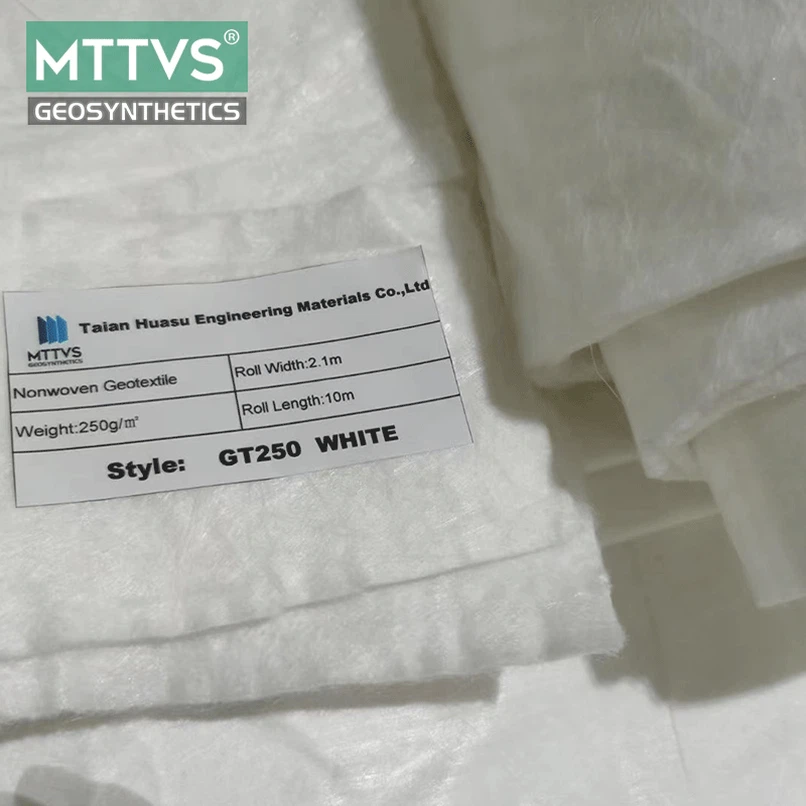
The manufacturing process of geotextiles involves first processing polymer raw materials into silk, short fibers, yarn or strips, and then making flat structured geotextiles. Geotextiles can be divided into woven geotextiles and non-woven geotextiles according to their manufacturing methods. Textile geotextiles are composed of two parallel sets of orthogonal or diagonal warp and weft threads interwoven. Non woven geotextiles are made by directing or randomly arranging fibers and then processing them. According to the different methods of connecting fibers, there are three types of connection methods: chemical (adhesive) connection, thermal connection, and mechanical connection.
The outstanding advantages of geotextiles are light weight, good overall continuity (can be made into larger areas as a whole), convenient construction, high tensile strength, good corrosion resistance and microbial erosion resistance. The disadvantage is that without special treatment, the anti ultraviolet ability is low. If exposed to the outside, it is easy to age under direct ultraviolet radiation, but if not directly exposed, the anti-aging and durability are still high.
Geomembranes can generally be divided into two categories: asphalt and polymers (synthetic polymers). Geomembranes containing asphalt are mainly composite (including woven or non-woven geotextiles), with asphalt used as a wetting binder. Polymer geomembranes are divided into plastic geomembranes, elastic geomembranes, and composite geomembranes based on different main materials.
A large number of engineering practices have shown that geomembranes have good impermeability, strong elasticity and adaptability to deformation, can be suitable for different construction conditions and working stresses, and have good aging resistance. The durability of geomembranes in underwater and soil environments is particularly prominent. Geomembranes have outstanding anti-seepage and waterproof properties.
Density: Density depends on the material used to manufacture it, and even if the polymers used to manufacture geomembranes belong to the same category, there are often significant differences. For example, polyethylene materials can be classified into different categories such as ultra-low density, low density, medium density, and high density, resulting in differences in the density of PE geomembranes. The density range of geomembrane polymers is approximately 0.85mg/L to 1.50mg/L, and the commonly used density in engineering is generally above 0.94mg/L.
Thickness: The thickness refers to the distance between the top and bottom of the membrane under the normal pressure of 20kPa. For smooth geomembranes (without embossing or patterns on the surface), the thickness measurement method is similar to that of geotextiles, but a more accurate micrometer should be used for measurement. Each sample should be measured at least three different positions, and the average value should be taken as the thickness of the PE composite geomembrane.
Geogrid is a major geosynthetic material, which has unique performance and efficacy compared to other geosynthetic materials. Geogrids are commonly used as reinforcement materials for reinforced soil structures or composite materials. Geogrids are divided into two types: glass fiber and polyester fiber.
Plastics
This type of geogrid is a polymer mesh material with square or rectangular shapes formed by stretching, which can be divided into two types based on the different stretching directions during manufacturing: unidirectional stretching and biaxial stretching. It is punched on polymer sheets (mostly made of polypropylene or high-density polyethylene) that have been extruded, and then subjected to directional stretching under heating conditions.
Unidirectional stretching grids are only made by stretching along the length direction of the sheet, while biaxial stretching grids are made by continuing to stretch the unidirectional stretching grid in the direction perpendicular to its length.
Due to the rearrangement and orientation of polymer polymers during the heating and elongation process in the manufacturing of geogrids, the bonding force between molecular chains is strengthened, achieving the goal of improving their strength. Its elongation is only 10% to 15% of the original board. If anti-aging materials such as carbon black are added to the geogrid, it will have better durability such as acid resistance, alkali resistance, corrosion resistance and aging resistance.
Fiberglass class
This type of geogrid is made of high-strength glass fiber, sometimes combined with self-adhesive pressure sensing adhesive and surface asphalt impregnation treatment, to tightly integrate the geogrid and asphalt pavement. Due to the increased interlocking force between soil and stone materials within the geogrid grid, the friction coefficient between them significantly increases (up to 0.8-1.0). The pull-out resistance of the geogrid embedded in the soil significantly increases due to the strong friction and biting force between the geogrid and the soil, making it a good reinforcement material.
At the same time, geogrid is a lightweight, flexible flat mesh material that is easy to cut and connect on site, and can also overlap and overlap. It is easy to construct and does not require special construction machinery or professional technical personnel.
1 Geomembrane bag
Geomembrane bag is a continuous (or individual) bag like material made of double-layer polymerized synthetic fiber fabric. It uses a high-pressure pump to pour concrete or mortar into the bag, forming a plate like or other shaped structure. It is commonly used in slope protection or other foundation treatment projects. Membrane bags are divided into two categories based on their materials and processing techniques: mechanical and simple membrane bags. Mechanized membrane bags can be divided into three types based on their presence or absence of filtration drainage points and their shape after inflation: filtration drainage point membrane bags, non filtration drainage point membrane bags, non drainage point concrete membrane bags, and hinge block type membranes.
2.Geonet
Geonet is a network of geosynthetic materials with large pores and high stiffness in a planar or three-dimensional structure, woven from synthetic material strips, coarse strands, or pressed with synthetic resin. Used for soft foundation reinforcement cushion layer, slope protection, grass planting, and as a substrate for manufacturing composite geotechnical materials.
3. Geomesh mats and geogrid chambers
Geomesh pads and geogrids are both three-dimensional structures specially made of synthetic materials. The former is mostly a three-dimensional permeable polymer mesh cushion composed of long fibers, while the latter is a honeycomb or grid like three-dimensional structure composed of geotextiles, geogrids or geomembranes, and strip polymers. It is commonly used for erosion prevention and soil protection engineering. Geocells with high stiffness and lateral confinement capacity are often used in reinforced cushion layers, roadbed beds, or track beds.
4.Polystyrene foam (EPS)
Polystyrene foam (EPS) is an ultra light geosynthetic material developed. It is formed by adding a foaming agent to polystyrene, pre foaming with a specified density, and then drying the foam particles in a silo before filling them into a mold and heating them. EPS has the advantages of light weight, heat resistance, good compressive performance, low water absorption, and good self-supporting properties, and is commonly used as a filler for railway embankments.
Geotextiles, geomembranes, geogrids, and certain special geosynthetic materials are formed by combining two or more materials to form geosynthetic materials. Geocomposite materials can combine the properties of different materials to better meet the needs of specific engineering, and can play a variety of functional roles. A composite geotextile is a combination of geotextile and geotextile made according to certain requirements.
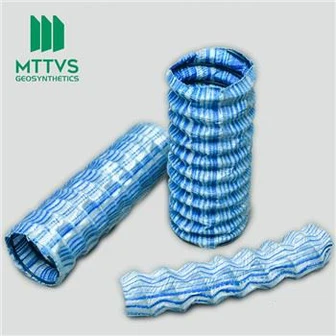
Among them, geotextile is mainly used for anti-seepage, and geotextile plays a role in reinforcement, drainage, and increasing the friction between geotextile and soil surface. Another example is geotextile composite drainage materials, which are drainage materials composed of non-woven geotextiles, geotextile nets, geotextile membranes, or geosynthetic core materials of different shapes. They are used for soft foundation drainage consolidation treatment, longitudinal and transverse drainage of roadbed, underground drainage pipes in buildings, collection wells, wall drainage of supporting buildings, tunnel drainage, embankment drainage facilities, etc. The plastic drainage board commonly used in roadbed engineering is a type of geosynthetic composite drainage material.
The geosynthetic composite materials widely used for roads abroad are fiberglass polyester anti cracking fabric and warp knitted composite reinforced anti cracking fabric. It can extend the service life of roads, greatly reducing the cost of repair and maintenance. From the perspective of long-term economic benefits, it is necessary for China to actively adopt and promote geosynthetic composite materials.
Geosynthetic materials have different characteristics for different products and can be applied in many engineering fields.
The fields that have been applied include geotechnical engineering, civil engineering, water conservancy engineering, environmental engineering, transportation engineering, municipal engineering, and land reclamation engineering.
In terms of protection:
Soil erosion is a natural process caused by hydraulic and wind forces, with numerous influencing factors such as soil, vegetation, and topography. Under specific conditions, human activities can also accelerate this process. If this erosion effect is not properly treated, it may cause significant damage to existing buildings and the environment.
In terms of soil erosion control, geosynthetics can be applied to slope protection, water conveyance channel protection, coastline protection, mudflat reclamation, vegetation restoration, rockfall protection network and flood control dam construction. According to the characteristics of the project and site conditions, erosion control engineering may involve one or more geosynthetic material products.
In slope protection engineering, in addition to using some geosynthetic materials, soil nails and even rock anchor rods are needed to ensure the stability of the protection system. In some cases, geotextile bags filled with heavy mortar are also used to fix the protective surface, and grass seeds are inserted into the gaps of the protective structure to cultivate vegetation and prevent soil erosion.